Referral

Do you feel self-conscious when you smile because of your overbite? An overbite is a common dental issue that occurs when the top teeth overlap the bottom teeth. It affects not only your appearance but also your bite, causing discomfort and difficulty with chewing. Fortunately, there are several solutions available to fix an overbite, including ceramic braces. In this blog post, we’ll explore what an overbite is, its causes, and how ceramic braces can help correct it – so let’s dive in!
What is an Overbite and What Causes It?
An overbite is a dental condition where the upper front teeth overlap with the lower front teeth more than they should. Normally, when you close your mouth, your top and bottom teeth rest comfortably together. But in people with an overbite, this isn’t the case. There are different types of overbites – some minor and others more severe. It’s important to note that not all of them require treatment; however, it’s always best to consult with an orthodontist who can evaluate your specific situation. So what causes an overbite? Genetics play a role in many cases of overbites. However, there are other factors that contribute as well, such as thumb-sucking or pacifier use during childhood, which can cause changes in jaw growth. Other potential causes include tongue thrusting or poor oral habits like nail-biting. Regardless of how you got your overbite, if left untreated, it can lead to serious problems down the line such as tooth decay and gum disease – so be sure to address any concerns you have with a qualified dental professional!
Types of Overbites
There are two main types of overbites: dental and skeletal. A dental overbite is when the teeth in the upper jaw protrude out farther than the teeth in the lower jaw, resulting in an overlapping or “deep bite” appearance. This type of overbite can be caused by improper jaw growth, thumb-sucking habits, or missing teeth.
On the other hand, a skeletal overbite occurs when there is a misalignment between the upper and lower jaws themselves. This results in abnormal positioning of both sets of teeth and can cause functional problems with speaking and eating properly. Skeletal overbites are usually genetic but can also be caused by trauma to the face.
It’s important to note that not all cases of overbites require treatment, as some people may have slight variations without any negative effects on their daily lives. However, if an individual experiences pain while chewing food or has speech difficulties due to their overbite, they should consult with an orthodontist for proper diagnosis and treatment options tailored specifically for them.
The Different Types of Ceramic Braces
Ceramic braces are a popular alternative to traditional metal braces. They use clear or tooth-colored brackets and wires that blend with the teeth, making them less noticeable than metal braces. There are different types of ceramic braces available in the market today that cater to varying dental needs. One type is self-ligating ceramic braces, which have a unique clip mechanism rather than elastic bands for holding the wire in place. This makes adjustments more comfortable and reduces pressure on teeth. Another type is lingual ceramic braces, which are similar to traditional lingual braces but use tooth-colored brackets instead of metal ones. These are attached to the back of your teeth, making them virtually invisible from the front. Clear aligners such as ClearCorrect can also be considered a type of ceramic brace. Made from transparent plastic material, these custom-made aligners fit over your teeth like a glove and gradually shift them into position without any visible brackets or wires.
How Ceramic Braces Work
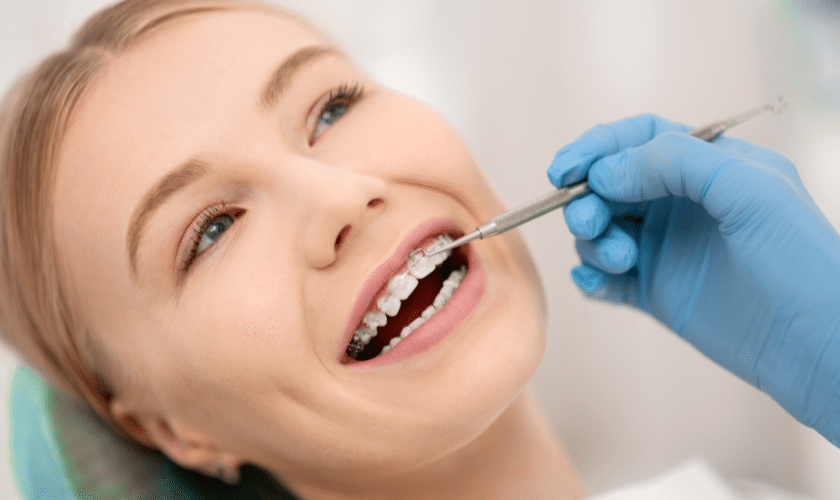
Ceramic braces work in a similar way to traditional metal braces. The only difference is that ceramic braces use tooth-colored brackets and wires, making them less noticeable than their metal counterparts.
The brackets are attached to the teeth using dental adhesive, and an archwire is threaded through each of the brackets. To straighten the teeth and correct an overbite, gentle pressure is applied to the archwire by tightening it with small elastic or metal ties.
Over time, this pressure gradually moves the teeth into their desired position. Patients may need to have their ceramic braces adjusted every four to six weeks so that tension can be increased as needed.
One advantage of ceramic braces is that they blend in with natural teeth better than traditional metal ones. However, patients must take extra care when cleaning their teeth while wearing ceramic braces because they can stain more easily than other types of orthodontic appliances.
Ceramic braces offer effective treatment for fixing an overbite and achieving a beautiful smile without drawing attention to your dental work.
Benefits of Having a Fixed Overbite
Having a fixed overbite can bring numerous benefits to your overall health and well-being. One of the most obvious advantages is an improved appearance. A straighter smile with properly aligned teeth can boost your confidence, leading to increased self-esteem in social situations. In addition to aesthetic improvements, a fixed overbite also offers functional benefits such as better oral hygiene. When teeth are properly aligned, it becomes easier for you to brush and floss them thoroughly, reducing the risk of gum disease and tooth decay. Another important benefit of having a fixed overbite is improved chewing efficiency. A misaligned bite forces certain teeth to take on more pressure than they should while eating, which can cause discomfort when chewing or even lead to headaches or jaw pain. Fixing an overbite helps prevent further dental issues down the line by avoiding uneven wear on teeth that may result from grinding or clenching caused by misaligned bites. Choosing ceramic braces for correcting your overbite provides multiple benefits beyond just improving your smile’s cosmetic appeal.
The Bottomline
Having an overbite can cause discomfort and affect your self-esteem. Fortunately, ceramic braces offer a discreet and effective solution that can help you achieve a perfect smile.
In this article, we’ve covered the different types of overbites and how they can be corrected with ceramic braces. We also discussed the various types of ceramic braces available and how they work to straighten teeth. If you’re struggling with an overbite or other dental issues, it’s essential to consult with a qualified orthodontist who can provide personalized advice based on your specific needs. With advances in orthodontic technology, correcting dental irregularities has never been easier or more accessible. By choosing the right treatment option, like ceramic braces for fixing your overbite, you’ll be one step closer to achieving a healthy and beautiful smile that will last a lifetime!